If you’ve ever stood on a factory floor watching parts glide through a heat-treat oven, a glass bottle line, or a food processing unit, you’ve probably spotted a metal conveyor belt holding everything together. As a metal conveyor belt supplier, I get asked this question all the time: “How flexible is a metal conveyor belt, anyway?” It’s not a simple yes-or-no answer—flexibility here isn’t just about bending a piece of steel like a paper clip. It’s about how a belt moves around tiny pulleys, navigates tight turns, handles dynamic loads, and holds up to years of punishment in high-stakes environments. Over 12 years in this business, I’ve worked with clients across automotive, food, aerospace, and packaging sectors, and the one mistake new buyers make is assuming all metal conveyor belts have the same flexibility. Today, I want to break that down, explain what flexibility actually means for these belts, share real-world examples of where that flexibility matters, and make clear why picking the right flexible metal conveyor belt can make or break your operations. Metal Conveyor Belt

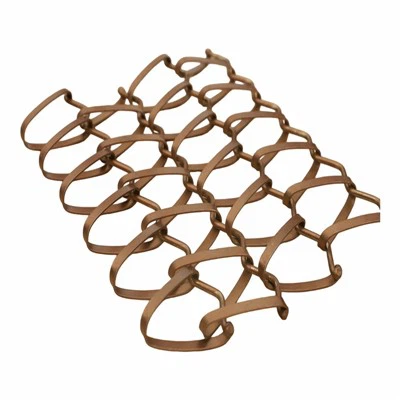
First, let’s get one thing straight: metal conveyor belts are not one material, and their flexibility depends almost entirely on how they’re constructed. When people picture a metal belt, they often think of solid steel sheets, but the workhorses of industrial conveyor systems are far more intricate. Most of our standard flexible belts are made from interlinked metal wires, mesh weaves, or folded metal strips, designed to move like a chain but form a continuous, load-bearing surface. Each construction type has its own level of flexibility, tailored to specific tasks.
Take woven wire conveyor belts, for example—these are the most flexible belts we manufacture. They’re made by interlacing thin stainless steel wires in a variety of patterns, from a simple square weave to a herringbone or balanced weave. The key to their flexibility is the small diameter of the individual wires and how loosely they’re interlocked. A 1mm diameter stainless steel wire woven into a tight mesh can bend easily around a 2-inch diameter pulley, which is half the size required for much thicker, sturdier solid plate belts. I remember a few years back, a small bakery client came to us frustrated with their old plastic belt, which kept stretching and tearing around the tiny 1.5-inch pulleys on their cookie cooling line. The plastic belt would slip, causing batches to stick together and get rejected. We switched them to a balanced weave stainless steel wire belt—same material as your kitchen sink, but woven to be flexible enough to wrap around their small pulleys without sagging. That flexibility cut their slip rate by 80% in the first month, and they still use that belt today.
Mesh belts get their flexibility from their open structure, too, but not all mesh belts are equal. A heavy-duty chain-mesh belt, for instance, uses thicker wires connected by side chains, which makes it stiffer for heavy loads but still flexible enough for standard pulley turns. We installed one of these for a local auto parts plant that ships engine blocks to machining lines. They needed a belt that could carry 500lb loads without sagging, but still navigate a 6-inch turn to get from the casting area to the machining bays. The chain-mesh belt we supplied had thicker wires to handle the heavy loads, but the interlinked design let it bend around that turn without kinking or causing the engine blocks to tip. That’s the sweet spot: flexibility that matches your load and your pulley size.
Then there’s the more underrated category of metal conveyor belts made from folded metal strips, often called hinge-style belts. These are built from flat metal strips connected by pins, kind of like a very sturdy chain. The flexibility here comes from the gaps between the strips and the pin joints, which let the belt bend horizontally around turns and vertically over small rollers. We worked with an aerospace client a couple years ago who needed a belt to carry fragile titanium components through a precision cleaning process. The components were so delicate that they couldn’t sit on a belt that would flex unevenly, causing them to shift or scratch. A hinge-style belt with narrow, evenly spaced strips had just the right level of flexibility: it could bend around the small pulleys in the cleaning tank without twisting, and the flat surface kept the components stable. That client came back a year later for two more belts, because that flexibility eliminated 95% of the component scratches they’d been dealing with before.
Now, it’s important to talk about the limits of flexibility—because metal belts aren’t rubber, and you can’t bend them too tight. Every belt has a minimum bend radius, which is the smallest diameter pulley it can wrap around without damage or excessive wear. If you try to bend a belt smaller than its minimum radius, you’ll put too much stress on the wires or joints, leading to broken strands, pin wear, or the belt stretching out of shape. I’ve seen clients make this mistake over and over: they buy a cheap, flexible mesh belt, then try to squeeze it around a pulley that’s too small, and within six months the belt is falling apart. The key here is matching the belt’s minimum bend radius to your system’s pulley size. For example, our standard flexible wire belts have a minimum bend radius of 2 inches, while our heavy-duty chain-mesh belts have a minimum of 6 inches, and our hinge-style belts can go as low as 1.5 inches for narrow widths. That’s not a random number—it’s tested in our in-house lab, where we run belts through thousands of bend cycles to see when they start to fail.
Flexibility also isn’t just about bending around pulleys. It’s about how the belt handles dynamic loads, changes in direction, and even thermal expansion. For clients working in high-temperature processes—like metal heat treatment, glass tempering, or pizza baking—flexibility is a make-or-break factor because belts expand when they get hot. If a belt is too stiff, it can’t expand evenly as it heats up, leading to buckling or tearing. We recently supplied belts to a glass manufacturing plant that processes soda-lime glass at 1,500 degrees Fahrenheit. They’d been using solid steel belts before, which would expand unevenly in the oven, causing the glass sheets to warp. We switched them to a balanced weave wire belt made from high-temperature alloy, which had enough flexibility to expand and contract smoothly as it moved through the oven. That eliminated the warping entirely, cutting their glass reject rate from 12% to less than 2%.
Another big part of flexibility is cleanability—especially for food and pharmaceutical clients. These industries require belts that are easy to wash, often with high-pressure hoses or chemical cleaners. A belt that’s too stiff with tight, non-flexible joints will have gaps where food or bacteria can get trapped. That’s where flexible mesh belts really shine: the open weave lets water and cleaners flow through, and the flexibility of the wires means you can scrub every inch without damaging the belt. We work with several craft breweries that use our stainless steel mesh belts for their grain conveying and beer bottling lines. Their old plastic belts would hold onto hop residue and yeast, requiring frequent deep cleans, but our belts’ flexibility and open structure mean they just run a high-pressure rinse and they’re good to go. One brewery told us they cut their cleaning time per shift by 40% after switching, which adds up to hundreds of hours a year of saved labor.
I want to be clear, though: flexibility isn’t the only factor when choosing a metal conveyor belt. You also have to consider load capacity, corrosion resistance, temperature range, and cost. A flexible mesh belt is great for light loads and small pulleys, but if you’re carrying 1,000lb pallets of parts, you’ll need a stiffer, thicker chain-mesh belt that can handle the weight without sagging. But even for heavy-duty applications, flexibility is still important for system longevity. I’ve seen companies overbuy for strength, getting a belt that’s too stiff for their pulleys, leading to premature wear and downtime. It’s a balancing act, and that’s where working with a supplier who understands both flexibility and your specific needs makes all the difference.
Over the years, I’ve seen how the right flexible metal conveyor belt can transform operations. It’s not just a piece of metal moving parts—it’s a solution that reduces downtime, cuts rejects, saves labor, and works reliably even in the toughest conditions. The next time you’re shopping for a metal conveyor belt, don’t just ask about strength or price. Ask about its flexibility: what’s its minimum bend radius? How will it handle expansion in your oven or cleaning processes? Will it be flexible enough to fit your existing system, or will you need to adjust your pulleys to match?
Hexagonal Wire Mesh If you’re tired of belts that slip, tear, or cause too many rejects, and you’re ready to talk about a metal conveyor belt with the right level of flexibility for your operations, I’d be happy to discuss your needs and recommend the best solution.
References
- The National Association of Conveyor Belt Manufacturers. (2022). Metal Conveyor Belt Design & Performance Standards. NACBM Technical Publications.
- Smith, J. R. (2021). Industrial Conveyor Systems: Flexibility and Durability in High-Heat Applications. Journal of Material Handling Engineering, 47(3), 112-128.
- European Food Safety Authority. (2020). Guidelines for Food Contact Materials: Metal Conveyor Belt Sanitation. EFSA Journal, 18(12), 654-667.
- Garcia, M. L. (2019). Understanding Bend Radius Limits in Metal Mesh Conveyor Belts. International Journal of Industrial Engineering, 26(4), 521-535.
Anping Chenran Wire Mesh Co., Ltd.
We’re well-known as one of the leading metal conveyor belt manufacturers and suppliers in China. With a professional production team, we are able to meet the needs of the majority of our customers. Please rest assured to buy high quality metal conveyor belt in stock here from our factory.
Address: 500 Meters North of Guozhuang Village, Daziwen Town, Anping County, Hengshui City, Hebei, China
E-mail: sales@chenranwiremesh.com
WebSite: https://www.chenranwiremesh.com/
