If you’ve ever stood next to a running CNC metal lathe, you’ve probably heard a constant, low-pitched hum—plus maybe a soft spray of cool mist or a thin stream of liquid arcing over the spinning metal piece. That’s the coolant system at work, and it’s way more important than just keeping the machine from overheating. As a CNC metal lathe supplier, I see way too many new operators skip or botch coolant system maintenance, and that’s how you end up with scrap parts, burnt tooling, or a $10k repair bill for a spindle that seized up. Let me break this down like I would for a first-time customer, no fancy jargon, no corporate fluff. CNC Metal Lathe
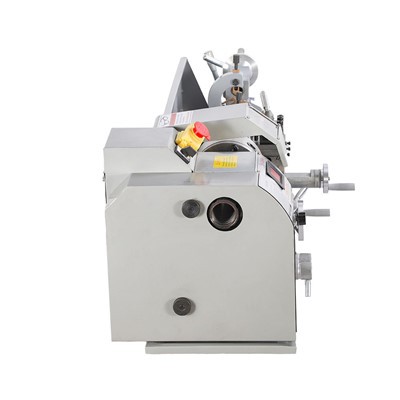
First, let’s get one thing straight: CNC metal lathes don’t cut metal with just sharp tool bits and brute force. When a lathe spins a steel bar at 1,000 RPM and shoves a carbide insert into it, that tiny contact point between the tool and the workpiece heats up—like, thousands of degrees hot. If you didn’t have a coolant system, that heat would warp the metal part you’re trying to make, melt the tool bit so it’s useless in 10 minutes, and even make the lathe’s spindle expand just enough to throw off your part tolerances by 0.001 inches. That’s a big deal when you’re making parts that have to fit together, like engine components or industrial fasteners.
So what exactly is a CNC lathe coolant system made of? It’s not just a bucket of water with some blue goop dumped in. The core parts I see in almost every standard system my team installs (and the upgraded ones we offer for high-production shops) are four key pieces: the sump, the pump, the delivery lines, and the filter/cleaning unit. Let’s walk through how they work together, step by step.
The sump is basically a reservoir that holds all your coolant. It’s usually a metal tank at the bottom of the lathe, sometimes built right into the machine base, sometimes a separate unit if you need extra capacity for running multiple tools at once. Sump size matters a lot—if you have a shop running 12-hour shifts stamping out parts, you need a bigger sump so the coolant doesn’t get too warm from constant recirculation. Too small, and your coolant can’t absorb heat fast enough, turning into a lukewarm mess that does almost nothing.
Next is the pump. This is the workhorse that pulls coolant out of the sump and pushes it through the lines to where you need it. I always tell customers not to skimp here—cheaper pumps burn out fast, especially if the coolant has debris in it. A good pump will push enough volume to cover the tool and workpiece, but not so much that it splashes everywhere and makes a mess on your shop floor. Some of our mid-range lathes have two pumps: one for the main cutting zone, and a smaller one for washing away chips from the lathe bed after a part is done. That’s a small upgrade that saves a ton of cleanup time, let me tell you.
Then there are the delivery lines, which feed the coolant to the cutting area. These are usually flexible rubber hoses or rigid metal tubes with nozzles at the end—sometimes one big nozzle, sometimes two small ones aimed right at the tool tip and the edge of the workpiece. A lot of newer CNC lathes have automated nozzles that move with the tool post, so you don’t have to adjust them manually every time you switch to a different size part. For example, if you’re turning a 1-inch steel rod vs. a 6-inch aluminum block, the nozzle automatically shifts to keep the coolant pointed exactly where it’s needed, no guesswork. That’s a game-changer for shops running different part sizes all day.
Last, and most often ignored, is the filter and recirculation system. When you cut metal, you get tiny chips (called swarf) that fall off all over the place. If those chips get pumped back into the sump, they’ll scratch your tool bits, clog the nozzles, and even wear out the pump. The filter’s job is to catch that swarf before it circulates again. Some basic systems just have a simple mesh screen you have to pull out and clean every week, but our premium systems have centrifugal filters or magnetic separators that catch tiny metal particles automatically, so you only have to empty the sump once a month instead of every few days. For high-production shops, that’s a no-brainer—less downtime means more parts made, which means more money in your pocket.
Now, what’s coolant even made of? A lot of people think it’s just water, but straight water is bad news—it rusts the lathe’s metal parts, grows bacteria, and doesn’t cool as well as a mix. Most of the time, you’re mixing a concentrated coolant fluid (usually a synthetic, semi-synthetic, or oil-based mix) with water. The type you use depends on what you’re cutting. If you’re working with aluminum, you need a coolant that doesn’t leave a sticky residue on the part—aluminum shavings are super fine, so you want something that rinses off easy. For steel, you need a mix that has rust inhibitors to protect the lathe and the workpiece from corrosion. For high-heat applications, like cutting titanium, you might even use a straight oil coolant, because it has better heat resistance than water-based mixes.
Wait, there’s a part I almost forgot: some CNC lathes have through-tool coolant. That means the coolant doesn’t just spray from a nozzle on the side—it’s pumped through the hollow center of the tool holder and comes out right at the cutting edge of the tool. That’s way more effective for deep cuts or hard materials, because the coolant gets directly into the gap between the tool and the workpiece, instead of getting blown away by chips or air. I’ve had customers tell me that switching to through-tool coolant cut their tooling costs by 30% because their tools didn’t wear out as fast. It’s a small feature, but it makes a huge difference for tough jobs.
Now, let’s talk about common mistakes I see all the time. First, not maintaining the coolant. A lot of shops just top off the sump with water when it’s low, and never change the mix. After a few weeks, bacteria grows in the sump, turning the coolant slimy and smelly, which not only makes it less effective but can also make operators sick from the fumes. The filter gets clogged, so the pump works harder and burns out, and chips build up so much that the coolant can’t flow properly. We have customers that follow a simple schedule: test the coolant pH every two weeks, add more concentrate if it’s too diluted, clean the sump and filter once a month, and fully replace the coolant every three months. That’s it, and their lathes run like new for years.
Second, using the wrong coolant for the job. I once had a customer use a general-purpose coolant for cutting 4140 steel, and their tool bits were burning out in 5 minutes. We switched them to a semi-synthetic coolant designed for steel, and their tool life went up to 20 minutes. That’s a huge difference when you’re running 100 parts a day. Another customer used a oil-based coolant for aluminum, and their parts had a greasy film that took forever to clean before they could send them to the assembly line. We switched to a synthetic water-based mix for aluminum, and their cleanup time dropped by half.
Third, adjusting the nozzle wrong. New operators often point the nozzle too far from the tool, or at the wrong angle, so half the coolant is hitting the lathe bed instead of the cutting zone. That not only wastes coolant but also means your tool is getting less cooling, so it wears out faster. We train all our customers to adjust the nozzle so the stream is hitting the exact point where the tool touches the metal—usually, that’s the edge of the tool bit and the workpiece surface, right where the heat is generated. Some of our lathes even have a little indicator on the control screen that shows the optimal nozzle position, so you don’t have to guess.
Wait, what about mist vs. flood coolant? A lot of small shops or hobbyist lathes use mist coolant, which is a fine spray of coolant mixed with air. It’s good for small parts, but it doesn’t cool as well as flood coolant, which is a steady, strong stream covering the whole cutting area. For high-production or heavy cutting jobs, flood is the way to go. But mist is great for smaller lathes or shops that don’t want to deal with a big sump. We offer both, depending on what the customer needs.
Another thing: coolant systems also help with chip removal. When you’re cutting metal, those chips can get tangled around the tool or the workpiece, which can scratch the part or break the tool. The coolant washes those chips away as it flows, so you don’t have to stop and clean the lathe every 10 minutes. That’s another reason maintaining your coolant system is important—if it’s not flowing right, chips stay on the workpiece, causing scrap parts.
Now, let’s get to why this matters for you, the person buying a CNC lathe. If you’re in the market for a CNC metal lathe, don’t just look at the spindle speed or the part size it can handle. Ask about the coolant system: how big is the sump? Does it have filtration that’s easy to maintain? Is there a through-tool coolant option? If you’re a small shop that runs light jobs, a basic system works, but if you’re doing high-volume or hard material cutting, the coolant system should be a key selling point. Cheap lathes often have tiny sumps and flimsy pumps that break after a year, which means you’re stuck paying for a new coolant system or dealing with constant downtime.
As a supplier, we don’t just sell you a lathe and walk away. We help you pick the right coolant mix for your materials, show you how to maintain the system, and offer upgrades if you outgrow the basic setup. We’ve fixed so many customer issues that started with a bad coolant system—from seized spindles to scrapped batches of parts—and we always say the best investment you can make isn’t a fancied-up control screen, it’s a reliable coolant system that keeps your machine running.
If you’re shopping around for a CNC metal lathe and want to talk coolant systems, or anything else about getting a lathe that fits your shop’s needs, our team is here to help. We can walk you through the different coolant setups, answer any questions you have, and help you pick the right machine for your workload. Don’t hesitate to reach out to connect with our sales team to discuss your requirements.
Drill Presses References
- Manufacturing Processes for Engineering Materials, Kalpakjian & Schmid
- CNC Lathe Operation and Maintenance Guide, Haas Automation, Inc.
- Metalworking Coolants: Selection and Application, Society of Manufacturing Engineers (SME)
- Machining Fundamentals: Tooling, Cutting Fluids, and Machine Maintenance, Jacobs School of Engineering, University of California, Berkeley
YS Machine Tools Co., Ltd.
We’re well-known as one of the leading cnc metal lathe suppliers in China, featured by quality products and good service. Please rest assured to buy customized cnc metal lathe at competitive price from our factory. Contact us for more details.
Address: 300 Sandusky st, Ohio, 43611, USA
E-mail: yishoumachinetools@gmail.com
WebSite: https://www.ysmachinetool.com/
