Hey there, fellow tank users and project managers! Let’s cut to the chase: if you’re storing anything from fuel for your farm equipment to wastewater for your industrial site, and your location’s dealing with constant wind, you’ve probably wondered, “Can a double-walled tank even hold up here?” As a double-walled tank supplier who’s talked to dozens of folks grappling with gusty conditions, I’m here to break this down without all the boring engineering jargon you can skip through. No stuffy white papers, just real talk from someone who’s seen both the wins and the headaches that come with placing the wrong tank in a windy spot. Double-walled Tank
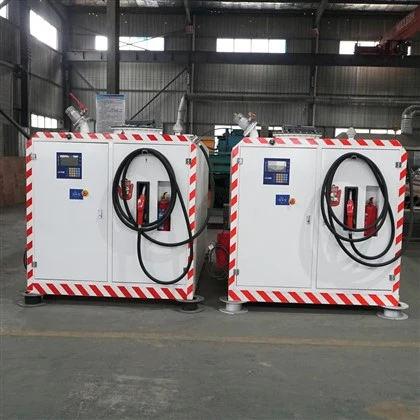
First off, let’s get one thing straight: double-walled tanks aren’t just for leak prevention (though that’s a huge plus) – their design actually makes them way more wind-resistant than most single-wall options. Wait, why is that? Let’s start with the basics of wind pressure on tanks. Ever see a single-wall metal tank get pushed sideways in a storm? That usually happens because the wind hits the flat sides, creating lift or shear force that makes the tank lean, shift, or even tip over. But double-walled tanks aren’t just two walls stuck together – they’re built with a space between the inner and outer walls (usually a few inches, depending on the size) that’s structurally reinforced with ribbing, welded seams, or even foam core for smaller units. That reinforcement isn’t just there to catch leaks if the inner wall fails – it’s there to keep the whole tank from flexing when wind hits it.
I had a customer up in North Dakota last year – let’s call him Jake, he runs a family farm with 1,200 acres and stores diesel for his tractors. He originally bought a single-wall tank because it was cheaper, and within six months, a spring windstorm (the kind that kicks up 50+ mph gusts, which is standard there) pushed the tank six inches off its concrete pad. Not only did that create a leak around the base, but he had to fork over $3,000 to have it reset and sealed. When he switched to our standard double-walled vertical tank, we added a few small but key tweaks for windy areas: thicker bottom flanges that bolt directly to the pad, and rounded edges on the outer wall instead of sharp corners. Last time I checked in, he said those gusts this year didn’t even nudge the tank – zero shifting, no leaks, and he saved himself the hassle of another repair. That’s the kind of real result I’m talking about.
But wait, before you go “great, just buy any double-walled tank and call it a day,” there are some things to watch out for, especially in super windy spots. Let’s split this into two categories: small double-walled tanks (under 5,000 gallons, usually for farms, small businesses, or residential use) and large double-walled tanks (10,000 gallons and up, for industrial sites, municipal waste, or fuel depots). The rules change a bit for each.
For small tanks, the biggest wind-related risk isn’t structural failure – it’s tipping. I’ve had a customer in coastal Oregon (where wind off the ocean hits 60 mph regularly) try a double-walled tank that wasn’t secured properly on a gravel pad. He thought “it’s small, it’s light” – nope, when a gust hit, it rolled about ten feet. Why? Small tanks have a higher center of gravity, so even moderate wind can create enough torque to tip them if the base isn’t anchored. That’s why we recommend two things for small double-walled tanks in windy areas: either use a steel concrete pad (not gravel, which shifts) and bolt the tank’s bottom flange down, or add weighted anchor blocks around the base if bolting isn’t possible for some reason. We’ve also started offering optional wind straps for small vertical tanks that attach to existing posts on the site – it’s a cheap add-on (less than 5% of the tank cost) and it’s stopped every tipping issue we’ve heard about so far.
For large tanks, structural integrity is way more critical. A 10,000 gallon double-walled tank that’s not built for wind can buckle, especially at the top, when wind hits. Let’s do a quick math check: a 10,000 gallon steel double-walled tank is about 12 feet in diameter and 20 feet tall. Wind at 70 mph creates about 25 pounds of force per square foot on the flat outer wall – that adds up to thousands of pounds of total force pushing the tank sideways. If the outer wall isn’t thick enough, or the ribbing between the inner and outer walls is too spaced out, that force can make the outer wall bulge or even crack at the seams. We’ve tested all our large double-walled tanks in wind tunnels (yeah, we’ve got a small in-house tunnel for this exact reason) and found that spacing ribbing every two feet along the outer wall, plus adding a reinforced top ring, makes them wind-resistant up to 90 mph gusts – which is way higher than almost any natural wind event you’ll encounter. Last year we delivered a 15,000 gallon double-walled tank to a mining site in Wyoming, where wind regularly hits 80 mph in the winter. The site manager texted me last month after a big storm saying the tank was completely untouched – no dents, no shifting, nothing. That’s exactly the kind of performance we design for.
Another thing people don’t think about: wind-related fluid sloshing. Wait, how does that tie into double-walled tanks? If you’re storing liquid (fuel, water, chemicals) in a tank that’s not anchored, wind can make the tank rock back and forth, which makes the fluid slosh. For single-wall tanks, this can cause leaks around the base or even push the tank off its pad. For double-walled tanks, the inner wall is separated from the outer wall, but if the whole tank is rocking, the inner wall can take extra stress at the seams. That’s why we always tell customers in windy areas to fill their double-walled tanks to at least 30% capacity – the extra weight at the bottom lowers the center of gravity and keeps sloshing to a minimum. Jake (the North Dakota farmer I mentioned earlier) fills his diesel tank to about 50% capacity during the wind season, and he said sloshing isn’t an issue at all – he checked the seams after the last big storm and there’s zero stress marks.
But let’s be real – no tank is indestructible, even a double-walled one. There are a few scenarios where a double-walled tank might struggle in super windy areas, and it’s important to know these so you can plan ahead. For example, if you’re in an area that regularly has tornado-force winds (over 110 mph), even our reinforced large tanks might need extra bracing – like additional steel I-beams around the outer wall, or deeper concrete pads that extend three feet below ground instead of the standard one foot. We don’t recommend cutting corners here – if you’re in a tornado-prone area, paying a little extra for custom bracing is way cheaper than replacing a ruined tank and the liquid inside.
Another scenario: if you’re storing light liquids, like gasoline or some industrial solvents, in a small double-walled tank. Light liquids have less mass, so wind can make the tank bob a bit more, which increases sloshing. For these, we suggest adding a few internal baffles inside the inner tank – these are small steel plates that break up the liquid movement, so sloshing is reduced. It’s a small modification, but it makes a big difference. We had a customer in Texas who stores gasoline for a small airport – they had a wind issue a couple years ago, added baffles to their small double-walled tank, and haven’t had any sloshing-related issues since.
Now, let’s address the elephant in the room: cost. I know what you’re thinking – “double-walled tanks are already more expensive than single-wall, and adding wind modifications will make them even pricier.” Yeah, upfront cost is higher, but let’s do the long-term math. A single-wall tank that gets pushed off its pad or damaged in a windstorm will cost you way more than a double-walled tank with wind modifications. Think about repair costs, lost product, downtime, even potential environmental fines if the tank leaks. I’ve seen customers pay $10,000 in fines for a single-wall tank leak that happened after a windstorm – that’s way more than the difference between a standard double-walled tank and one with wind bracing. For most people, the extra cost is a no-brainer when you look at the big picture.
Wait, I also want to mention a common myth: some people think double-walled tanks are too heavy for windy areas. That’s not true – actually, double-walled tanks are often more evenly weighted than single-wall tanks because of the two layers. If anything, their extra weight (compared to fiberglass tanks, which are lighter) makes them less likely to tip. Fiberglass double-walled tanks can be an option, but we always tell customers in windy areas to go with steel double-walled if possible – steel is denser, so it has a lower center of gravity, which is better for wind resistance. Fiberglass is fine for milder areas, but it’s more flexible and can get pushed around more by strong wind.
Let’s wrap this up with a quick real-world example that sums it all up. Last year, we worked on a project at a municipal water treatment plant in Colorado, where wind gusts hit 75 mph regularly in the spring. They were using single-wall steel tanks for their wastewater storage, and they had three of them shift off their pads in a storm a few years back, causing leaks that contaminated the soil around the plant. They replaced those with our 20,000 gallon double-walled vertical tanks, with bolted bottom flanges, ribbed outer walls, and a reinforced top ring. Six months later, during a wind event that hit 80 mph, the plant manager called me to say he checked all the tanks every hour – not one had moved, no dents, no leaks. They even said the double-walled tanks were easier to secure because the flange was wider, so bolting it down was more stable than the narrow flange on their old single-wall tanks.
So, to answer the original question: Yes, a double-walled tank can absolutely be used in a windy area – but only if you pick the right type, add the right small modifications, and secure it properly. It’s not a “set it and forget it” deal, but with a little planning, it will hold up way better than any single-wall tank in those gusty conditions.

If you’re dealing with wind issues at your site, and you want to talk about what kind of double-walled tank will work best for your needs – whether it’s a small farm tank, a large industrial unit, or something in between – hit us up. We don’t do one-size-fits-all, so we’ll help you figure out the right modifications for your specific location and product storage. No sales pitches, just straight talk about what will keep your tank safe and your costs low.
Mobile Explosion-proof Fuel Station References
- American Petroleum Institute. (2019). Wind Load Calculations for Aboveground Storage Tanks. API Publication 650.
- National Fire Protection Association. (2021). Standard for Aboveground Storage Tanks for Flammable and Combustible Liquids. NFPA 30.
- Steel Tank Institute. (2020). Design Guidelines for Wind-Resistant Double-Walled Storage Tanks. STI SP 120.
- Federal Emergency Management Agency. (2022). Wind-Resistant Construction for Agricultural Storage Tanks. FEMA Publication 357.
Shandong Jingcai Industry and Trade Co., Ltd.
As one of the most professional double-walled tank manufacturers and suppliers in China, we also support customized service. With abundant experience, we warmly welcome you to wholesale high quality double-walled tank in stock here from our factory. Contact us for free sample.
Address: Caojiazhuang Village Industrial Park, Lingcheng Town, Qufu City, Jining City, Shandong Province.
E-mail: shandongjingcai888@gmail.com
WebSite: https://www.sdjingcaicn.com/
