Yo, what’s up, folks! I’m a dude running a motor supply business, and today I wanna chat about one of the most important things about motors: the speed – torque characteristic. Motor
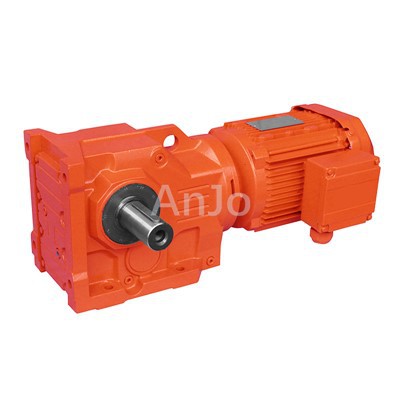
So, first off, let’s break down what speed and torque are. Speed is basically how fast the motor shaft spins. It’s usually measured in revolutions per minute (RPM). Torque, on the other hand, is the rotational force that the motor can produce. You can think of it as the motor’s "muscle." If you’ve ever tried to turn a stubborn nut with a wrench, the force you apply to the wrench is like torque, and the speed at which you turn the wrench is, well, the speed.
Now, the speed – torque characteristic of a motor shows how the motor’s speed changes as the torque it has to produce changes. Different types of motors have different speed – torque curves, and understanding these curves is super important for picking the right motor for a job.
Let’s start with DC motors. DC motors are pretty common, and they come in different flavors, like brushed and brushless. The speed – torque curve of a brushed DC motor is kind of a straight – line deal. When there’s no load on the motor (zero torque), it spins at its maximum speed. As you start adding load (increasing torque), the speed of the motor drops in a fairly linear way. This is because as the motor has to work harder to turn the load, it slows down.
For example, if you’ve got a little DC motor powering a small fan, when the fan blades are just spinning freely in the air, the motor runs at a high speed. But if you put your hand on the fan blades to slow them down, you’re adding load, and the motor’s speed will drop.
Brushless DC motors have a bit more complex speed – torque characteristic. They’re more efficient and have better control compared to brushed DC motors. Their speed – torque curve is flatter at low – to – medium torque levels. This means that they can maintain a relatively constant speed even when the load changes a bit. That’s why you often see brushless DC motors in things like drones, where precise speed control is crucial.
Next up, AC motors. There are two main types: induction motors and synchronous motors. Induction motors are the workhorses of the industrial world. Their speed – torque curve is a bit different from DC motors. At start – up, an induction motor has a high starting torque. This is important because it needs to be able to get heavy loads moving. As the motor speeds up, the torque decreases until it reaches a point called the "pull – out torque." If you try to load the motor beyond this point, it’ll stall.
Synchronous motors, as the name suggests, run at a synchronous speed that is determined by the frequency of the AC power supply and the number of poles in the motor. Their speed – torque curve is pretty unique. They have a constant speed regardless of the load until the load exceeds the motor’s maximum torque capacity. Then they’ll lose synchronism and stop running properly.
Why do we care about these speed – torque characteristics? Well, when you’re designing a machine or a system that uses a motor, you need to make sure the motor can handle the load. If you pick a motor with a speed – torque curve that doesn’t match the requirements of your application, you’ll run into problems.
For instance, if you’re building a conveyor belt in a factory. You need a motor that can start the heavy belt moving (so it needs good starting torque) and then maintain a relatively constant speed while the belt is running. An induction motor might be a good choice here because of its high starting torque and ability to handle medium – sized loads at a stable speed.
On the other hand, if you’re working on a high – precision robotic arm, you’d probably want a motor with a very precise speed – torque control. A brushless DC motor could be great for this, as it can maintain a constant speed even when there are small changes in the load.
As a motor supplier, I see firsthand how important it is for our customers to understand these things. We often get customers coming to us saying they’re having problems with their motors, and more often than not, it’s because they didn’t choose the right motor based on its speed – torque characteristic.
That’s why I’m always here to help. When you’re looking for a motor for your project, drop me a line. Tell me about your application, like what kind of load it has to handle, what speed range you need, and any other special requirements. I’ll dig into our inventory and find the perfect motor for you.
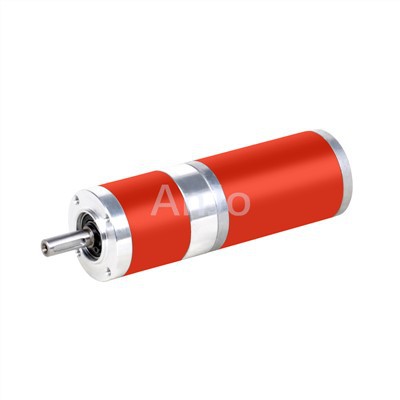
So, if you’re in the market for a motor, don’t go it alone. Reach out to me, and we’ll work together to pick the motor with the right speed – torque characteristic for your needs. Whether it’s for a small DIY project or a big industrial setup, I’ve got you covered.
BLDC Square Gear Motor References:
- "Electric Motors and Drives: Fundamentals, Types and Applications" by Austin Hughes and Bill Drury
- "Motor Handbook" by Arnold Tustin
Hangzhou ANG Drive Co., Ltd.
We’re well-known as one of the leading motor manufacturers and suppliers in China, also support custom service. Please feel free to wholesale high quality motor made in China here from our factory. Contact us for more details.
Address: No.185, Jincheng Rd., Hangzhou 311202, China
E-mail: export6@angdrive.com
WebSite: https://www.angdrive.com/
