Hey there! I’m a supplier of PVC hose machines, and I’m super excited to chat with you about what quality control means for these machines. You know, in our business, getting the quality control right is like hitting the bullseye. It’s not just about making sure the machines work; it’s about making sure they work really well and keep on working. PVC Hose Machine
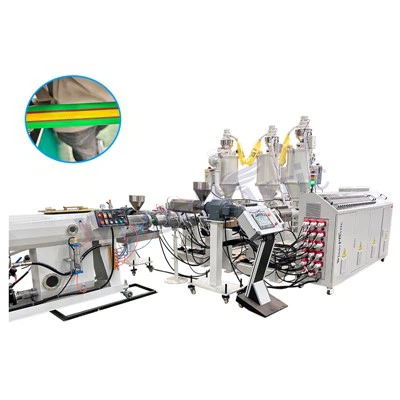
Let’s start with what a PVC hose machine actually does. These machines are the wizards behind the scenes that turn raw PVC materials into those flexible hoses we use in so many places. From watering our gardens to industrial uses, PVC hoses are everywhere, and the machines that make them need to be top – notch.
Raw Material Inspection
The very first step in quality control is checking the raw materials. You can’t make a great hose if you start with lousy materials, right? We carefully examine the PVC resin, additives, and other components that go into the mix. The PVC resin should have the right molecular weight and density. If it’s too light or too heavy, it can lead to hoses that are either too brittle or too soft.
We also look at the additives. Things like plasticizers, stabilizers, and colorants play a huge role in the final product. The plasticizers make the hose flexible. If we don’t use the correct amount, the hose might crack or break easily. Stabilizers are there to protect the PVC from heat and UV rays. And colorants? Well, they give the hose its nice look, but they also need to be of good quality so the color doesn’t fade quickly.
Machine Calibration
Once we’ve got the right materials, it’s time to fire up the machine. But before we start churning out hoses, we have to calibrate the machine. This is like tuning a guitar. Every part of the machine needs to be set just right to make sure the hoses come out with the correct diameter, thickness, and length.
We use precision tools to measure things like the screw speed, temperature settings, and pressure levels. The screw speed affects how fast the PVC material is pushed through the machine. If it’s too fast, the hose might not be fully formed. If it’s too slow, it could waste a lot of time and energy.
Temperature is another crucial factor. Different PVC formulations require different temperatures to melt and form properly. If the temperature is too high, the PVC can degrade, and if it’s too low, it won’t melt evenly, leading to a lumpy or uneven hose.
In – process Monitoring
While the machine is running, we don’t just sit back and relax. We keep a close eye on everything. We use sensors and visual inspections to make sure everything is going as planned. The sensors can detect things like changes in pressure, temperature, and flow rate. If there’s a sudden spike or drop in any of these values, it could be a sign of a problem.
For example, if the pressure in the extruder suddenly increases, it might mean there’s a blockage in the die or the screw. We need to stop the machine right away and fix the issue before it ruins a whole batch of hoses.
Visual inspections are also really important. We look at the hoses as they come out of the machine. Are they smooth? Do they have any bubbles or cracks? If we see anything suspicious, we take a sample and do more detailed tests.
Testing of Finished Products
Once the hoses are finished, they go through a series of tests. One of the most common tests is the burst test. We fill the hose with water or air and gradually increase the pressure until the hose bursts. This tells us how much pressure the hose can withstand before it fails. For industrial applications, a high burst pressure is essential.
We also do a flexibility test. We bend the hose at different angles and see how well it holds up. A good quality hose should be able to bend without cracking or losing its shape. Another important test is the chemical resistance test. Depending on where the hose will be used, it might come into contact with different chemicals. We expose the hoses to these chemicals and see how they react.
Quality Control Documentation
Throughout the entire process, we keep detailed records. We note down everything from the raw material suppliers and batch numbers to the machine settings and test results. This documentation is super important. It helps us track any issues that might come up later. If a customer reports a problem with a hose, we can go back to the records and find out exactly what went wrong.
It also helps us improve our quality control procedures. By analyzing the data over time, we can identify trends and areas where we need to make changes. Maybe we notice that a certain raw material supplier is causing more problems than others, or that a particular machine setting needs to be adjusted.
Training and Staff Competence
We can have all the fancy equipment and high – tech testing methods in the world, but if our staff doesn’t know how to use them properly, it’s all for nothing. That’s why we invest a lot in training our employees.
Our technicians are trained to operate the machines, perform the quality control tests, and interpret the results. They also learn how to troubleshoot any problems that might come up. We have regular training sessions to keep their skills up – to – date. And we encourage them to share their knowledge and experiences with each other.
Continuous Improvement
Quality control is not a one – time thing. It’s an ongoing process. We’re always looking for ways to make our products better and our processes more efficient. We keep an eye on the latest industry trends and technologies. Maybe there’s a new type of raw material that’s more durable and cost – effective, or a new testing method that can give us more accurate results.
We also listen to our customers. Their feedback is gold. If they have any suggestions or complaints, we take them seriously. We use that information to make changes to our products and services.
Why Quality Control Matters for You
As a customer, you might be wondering why all this quality control stuff matters to you. Well, let me tell you, it matters a lot. When you buy a PVC hose machine from us, you want it to work reliably. You don’t want to deal with constant breakdowns or hoses that don’t meet your standards.

A well – quality – controlled machine will produce hoses that are consistent in quality. This means that you can trust the hoses you’re making to perform well in their intended applications. Whether you’re using them for small – scale gardening or large – scale industrial projects, you can have peace of mind knowing that the hoses are up to the task.
Let’s Talk
PVC Pipe Machine If you’re in the market for a PVC hose machine, I’d love to have a chat with you. We’ve got a range of machines to suit different needs and budgets. Our quality control processes ensure that you’re getting a machine that will serve you well for years to come. So, don’t hesitate to reach out and start a conversation. We can discuss your specific requirements and find the perfect machine for you.
References
- "Plastics Extrusion Technology" by Allan A. Griff.
- "Handbook of PVC Formulating" by Edward J. Wickson.
Qingdao Wings Plastic Technology Co., Ltd.
As one of the most experienced pvc hose machine manufacturers and suppliers in China, we also support customized service. Please feel free to buy durable pvc hose machine made in China here from our factory. For price consultation, contact us.
Address: C02 Of Anshengyi Road, No.2 Fuan Industry Zone,Jiaodong Town, Jiaozhou City, Qingdao City, Shandong Province,China
E-mail: kelly@wingsplastic.com
WebSite: https://www.wingsextruder.com/
